About The Artist

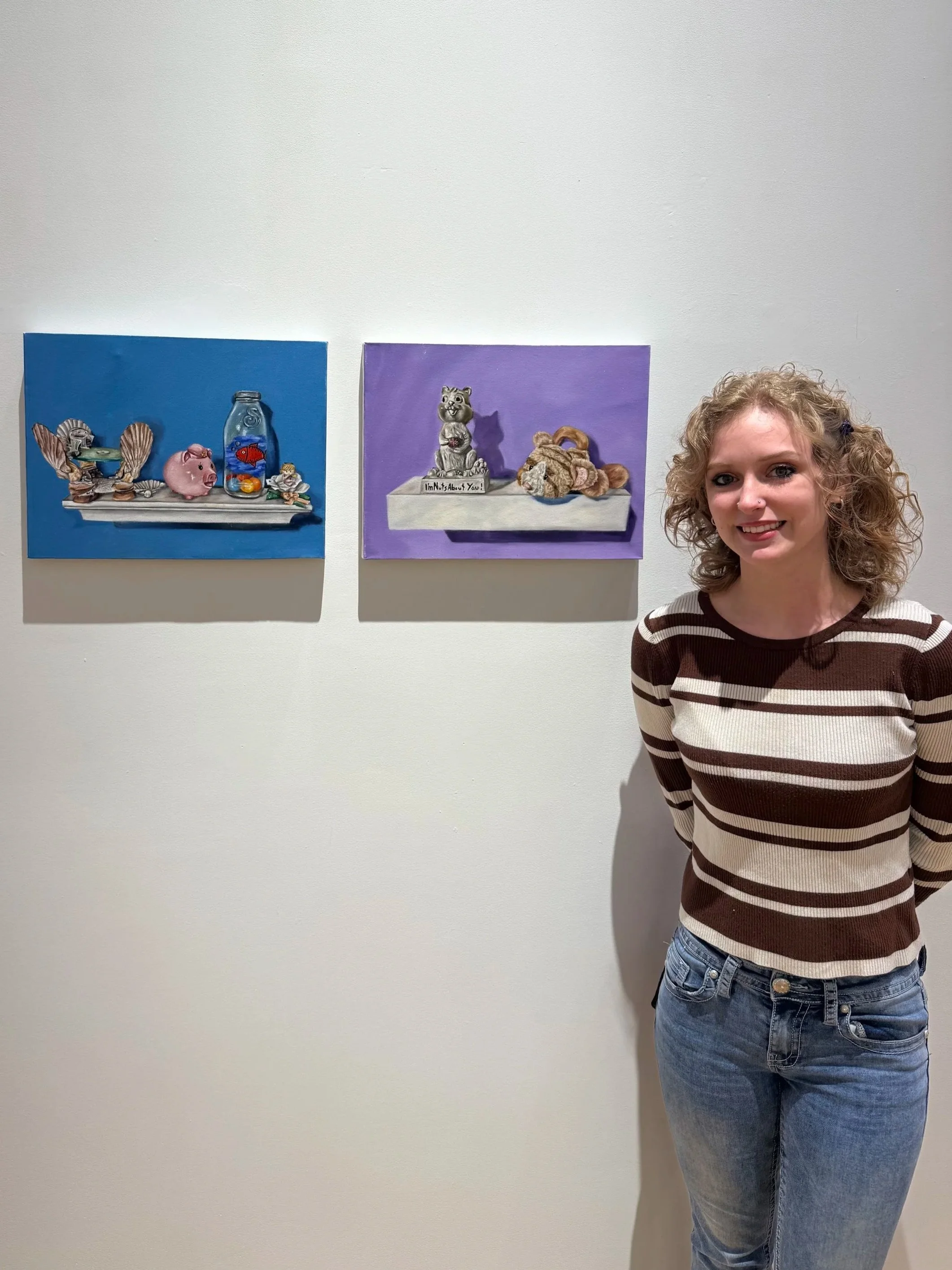
Rickie Stutzman’s work is heavily created around themes of home, identity, and displacement. Using traditional oil painting techniques, they use bold color and dramatic lighting to create visually intriguing and emotional pieces. Often merging real and surreal elements to create personal pieces based on personal experiences and relocating. Rickie received her Bachelors in Fine Arts in painting from Truman state university and is currently located in Colorado Springs.

Projects and Series
Bedroom Still Lives

2025
Displacement

2026

I Couldn’t Have Done it Alone

2025
Displacement 2026

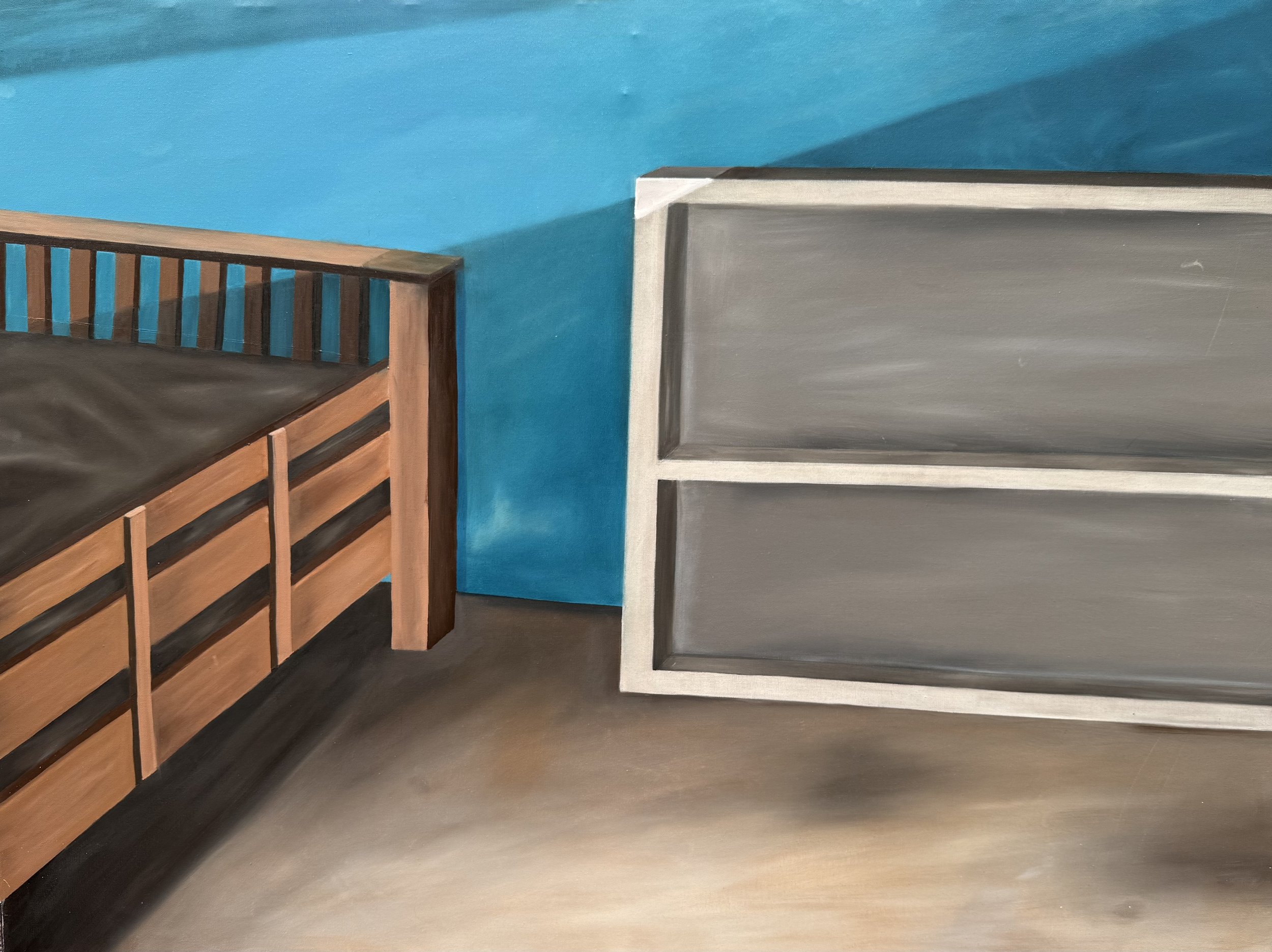
Between the ages of 15 and 18, I lived in four different states, moving so often that I became aware of how temporary the nature of everything around me was. Before that, I spent fifteen years in my childhood home in Ohio, surrounded by my extended family. Leaving created instability as I entered a cycle of constant relocation, fundamentally changing how I relate to both space and people. Over time, this instability led to a sense of detachment, as if nothing around me was permanent enough to invest myself into. My life became a continuous cycle of going through our belongings, only packing the essentials, and unpacking them again in a new and unfamiliar place. With each move, my family and I take our most important things into each new space, filling an unfamiliar room with comfort and familiarity. While my family has been a grounding and comforting source through this process, our shared experiences create a level of complexity in how we connect with one another. 

This series of paintings reflects my experience of moving by bringing together what was left behind and what continued to move with me. Using oil paint, I recreate my childhood bedroom, 107 South Ridge, as a space that now exists primarily in my memory, alongside portraits of my brothers and I, which are titled Rickie et al., Timmy et al., and Nicholas et al. These works are accompanied with smaller, interchangeable canvases that can be placed within the larger compositions by the viewer, allowing the images to shift and evolve. This interactive structure works to mirror the experience of moving itself, with the spaces and identities constantly rearranged and unsettled. By combining memory, physical space, and portraiture, Displacement explores how identity is shaped through movement. Home becomes fluid, constructed through people, objects, and experiences, rather than tied to a single location. 

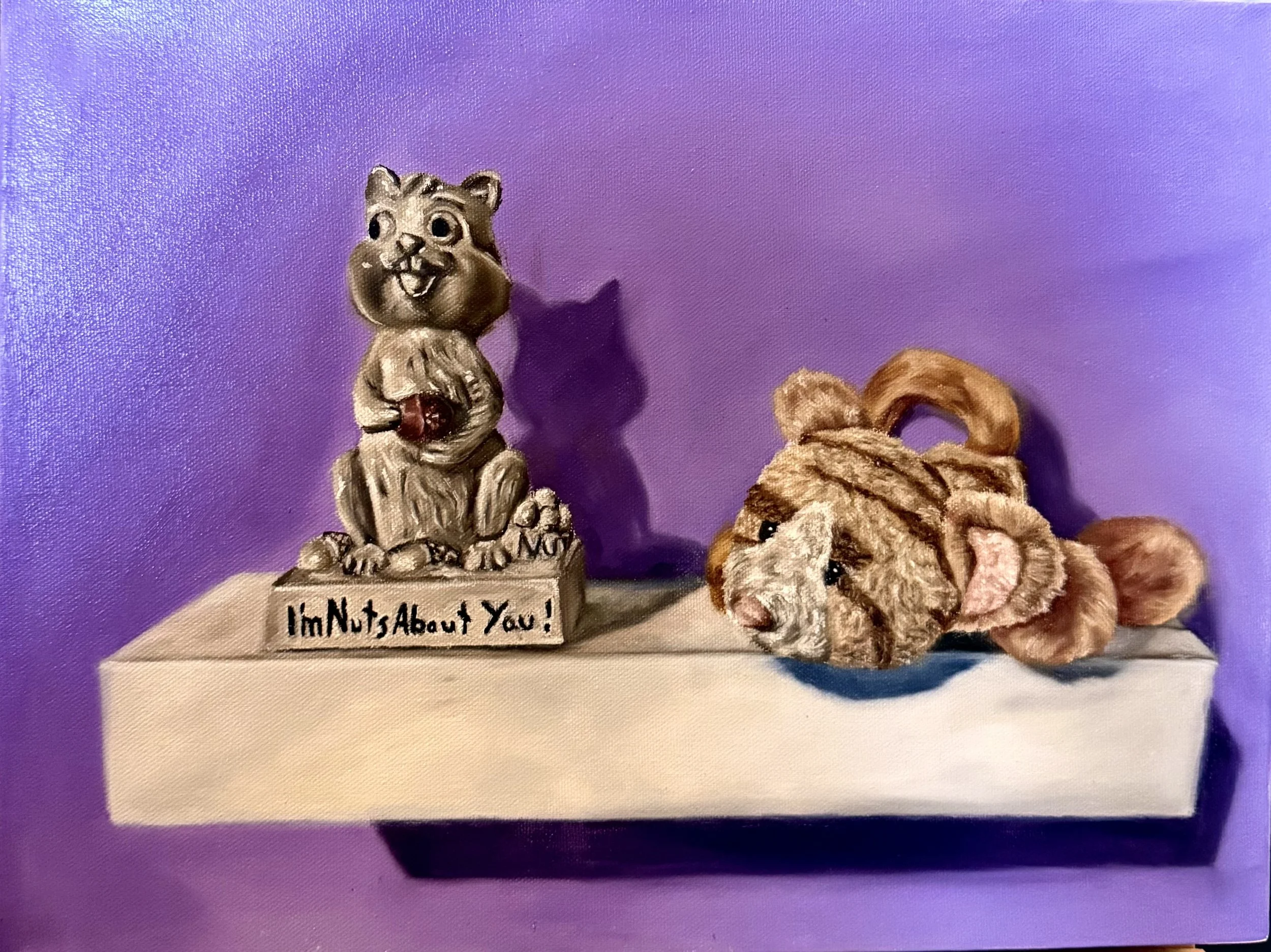
Bedroom Still Lives

Moving frequently in a short period of time, I was constantly packing my belongings, putting them in a new location, before shortly packing them up again. This led to me having a growing disconnection with the spaces and things around me, which once comforted me. This series depicts different personal objects that have traveled with me from my childhood home to my adult life. Each home I lived in, these objects were always placed next to each other, despite the fact that others were placed around my room carelessly. These objects are all very personal to me, and placing them in my new spaces allowed me to bring comfort. The objects vary from being early gifts between my grandparents and parents, such as the squirrel figurine and stuffed animal, or just simple knick knacks that I became attached to.  What started as a subconscious way of arranging my belongings after a move turned into a kind of ritual that helped connect me to my home. 

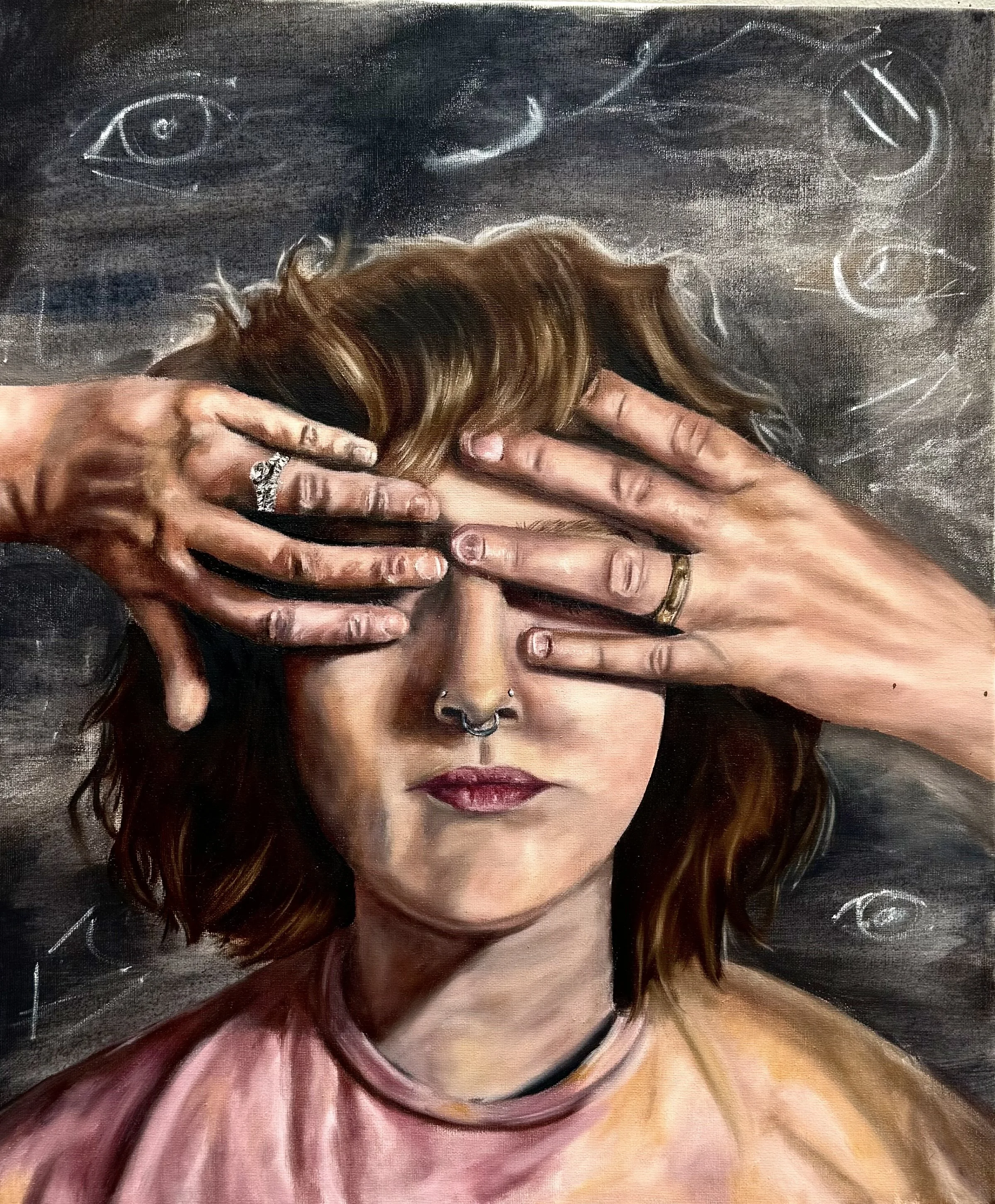
I Couldn’t Have Done It Alone 2025

     These portraits feature my siblings and I with our parents hands. What appears to be protective restricting our senses changes over time to be caring. My family moved for the first time in 2019 from Ohio to Kansas. I was 15, and my brothers were 11 and 9. It was incredibly difficult for all of us, and the upcoming COVID-19 shutdown didn’t help us make friends. I resented my parents for making us leave and felt useless in helping my brothers explore this new part of their lives. The more time we spent together the less that seemed to matter. What once felt like malicious hands covering our key senses, making it impossible for us to overcome our challenge,  now feel more caring. They helped push us toward each other, to realize we needed each other, especially when we had no one else. 

     This series is inspired by the three wise monkeys in a Japanese proverbial principle “See no evil, hear no evil, speak no evil”. I used this as a reminder to avoid negativity in my relationship with my family and not to dwell on the small issues we have.  “See No Evil” represents not focusing on the flaws of my family and instead choosing forgiveness and understanding. “Hear No Evil” encourages listening to each other without judgment.  “Speak No Evil” promotes kindness and constructive communication instead of insults and negative speech.

     Eventually, we began to rely on each other and finally felt like we were in an environment we could thrive, instead of one we were stuck in. While moving was one of the most difficult things I have ever experienced, I think it was one of the best things that has happened to me and my relationship with my family. 

Contact

Facebook

Instagram